
Desserts
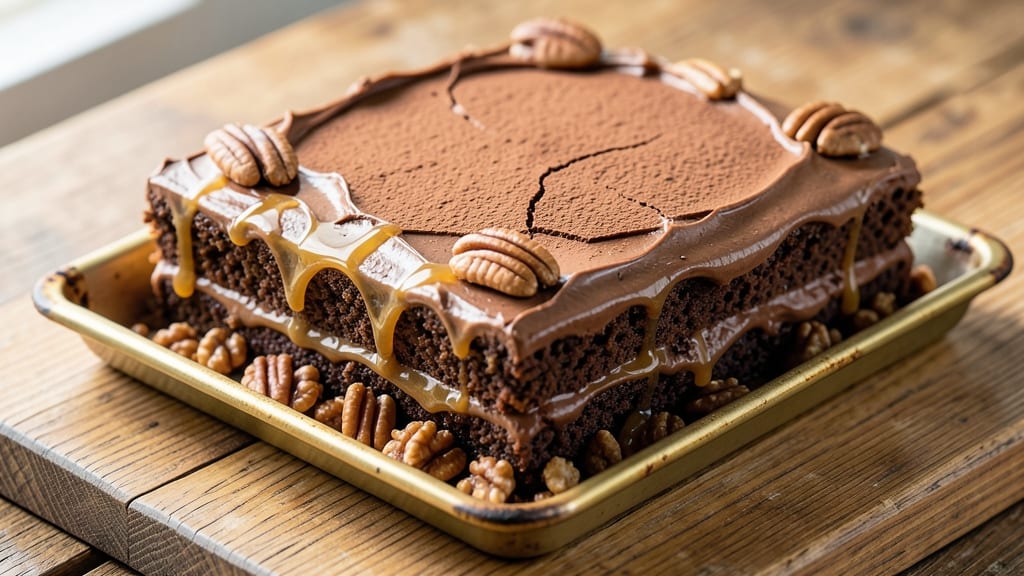
This baker’s German chocolate sheet cake recipe delivers the ultimate triple-layered dessert experience with rich chocolate cake, pecan-packed filling, and a velvety ganache frosting. 💛 The secret lies in balancing baking powder for light layers and precise layering techniques that create restaurant-quality texture without the fuss.
I've perfected this version over years of baking competitions, ensuring every slice delivers that signature crunch and melt-in-your-mouth ganache.
The cake's foundation begins with a tender yet sturdy chocolate batter that bakes up perfectly golden, while the pecan filling adds that essential crunch between layers. What sets this apart is the homemade ganache—smooth, glossy, and studded with toasted pecans—that transforms a simple sheet cake into a showstopper.
The recipe uses traditional German chocolate elements while incorporating modern adaptations for home bakers, like a foolproof layering method that prevents soggy bottoms.
By the time you're done, you'll have a stunning triple-layered cake with crisp edges, tender centers, and a glossy chocolate ganache that's impossible to resist. The aroma of baking chocolate and toasted pecans alone will have everyone gathering in the kitchen.
This cake serves 12-15 and makes an impressive centerpiece for any celebration, from birthdays to holiday gatherings.
The beauty of this recipe is its versatility—whether you're a seasoned baker or making your first sheet cake, the step-by-step instructions guide you through every phase.
From precise oven temperatures to perfect cooling techniques, every detail ensures your cake turns out flawlessly. Let's get started on creating this classic dessert masterpiece.
Ingredients for baker's german chocolate sheet cake
Fifteen ingredients for a showstopping triple-layered cake with rich chocolate, toasted pecans, and velvety ganache.
| Ingredient | Amount | Notes |
|---|---|---|
| All-Purpose Flour 🌾 | 4 cups | Sifted for light texture |
| Unsalted Butter 🧈 | 2 cups | Cold, cubed for cutting method |
| Granulated Sugar 🍚 | 3 cups | Divided for layers |
| Dark Brown Sugar 🍚 | 1 cup | Packed firmly |
| Cocoa Powder 🍫 | ¾ cup | Natural, unsweetened |
| Baking Powder 🧂 | 1 ½ tsp | Double-acting preferred |
| Salt 🧂 | ½ tsp | Fine sea salt |
| Vanilla Extract 🌸 | 2 tsp | Pure Madagascar preferred |
| Whole Milk 🥛 | 1 ½ cups | Room temperature |
| Large Eggs 🥚 | 4 whole | Room temperature |
| Pecans 🥜 | 3 cups | Chopped, toasted |
| Semisweet Chocolate Chips 🍫 | 1 ½ cups | High-quality, 60% cacao |
| Heavy Whipping Cream 🥛 | 2 cups | Cold for ganache |
| Powdered Sugar 🍚 | 3 cups | For dusting layers |
| Corn Syrup 🍯 | ½ cup | Light, for ganache |
The chocolate chips and pecans are non-negotiable for that signature German chocolate flavor. Ghirardelli or Guittard chocolate chips deliver the best melt, while raw pecans from Whole Foods toast up with deeper flavor. Toast your pecans in a dry skillet over medium heat until fragrant—about 3-4 minutes—then chop them finely. The corn syrup in the ganache is key for that signature gooey texture, but don't substitute with honey (it crystallizes). For the cocoa powder, Dutch-processed gives a smoother batter, but natural cocoa works too—just add an extra teaspoon of baking powder to compensate for its acidity.
No corn syrup? Light agave nectar works in a pinch, though the texture will be slightly less stable. Running short on pecans? Toasted walnuts or hazelnuts add a different but equally delicious crunch, though they lack that classic German chocolate profile. The heavy whipping cream must be cold when making the ganache—room temperature cream won't whip properly. For the eggs, separate them and whip the whites to stiff peaks before gently folding them into the batter to ensure maximum lift. And here's a pro tip: line your pans with parchment paper for easy removal and perfect edges.
Store the cake layers and ganache separately in airtight containers for up to 3 days at room temperature, or freeze the fully assembled cake for up to 3 months. To assemble, let everything come to room temperature first—this prevents the ganache from seizing up. The ganache will firm up slightly in the fridge but softens beautifully at room temperature. For serving, dust with powdered sugar and garnish with extra toasted pecans. This cake reheats beautifully—30 seconds in the microwave restores that fresh-from-the-oven warmth.
Why You'll Love This Recipe
- Sheet Pan Simplicity: I swear by this recipe because it’s just one bowl—no fussing with multiple pans or layers. Mix the flour, butter, sugars, and cocoa right in the pan, spread it out, and bake. Honestly, I’ve made this while chatting on the phone, and it still comes out perfectly even.
- Rich Without Effort: That combo of dark brown sugar and cocoa? It’s like German chocolate cake and fudge had a baby—deep, caramel-y, and just sweet enough without being overpowering. The butter keeps it moist, so every slice feels indulgent, not heavy.
- Crowd-Pleaser Any Day: Between us, this cake disappears at birthday parties, book club gatherings, or even as a "just because" dessert. It’s sturdy enough to cut into squares, so you’re not stuck with a whole cake on your hands. (Yes, even on a Tuesday night.)
- Budget-Friendly Luxury: You’re using pantry staples—flour, butter, sugar—that stretch far. A single sheet pan yields 16 servings, so you’ll have leftovers for days, and the cost per slice is a steal. Plus, the rich flavor makes it feel like a bakery treat without the price tag.
Step-by-step instructions for triple-layered German chocolate sheet cake
Here's how to build the perfect German chocolate cake with rich layers and that signature pecan-ganache crunch.
👨🍳 Step 1: Prepare the Cake Layers
Preheat your oven to 350°F and line three 9x13-inch baking pans with parchment paper. In a large mixing bowl, combine the 4 cups All-Purpose Flour, 1.5 tsp Baking Powder, 0.5 tsp Salt, and 0.75 cup Cocoa Powder. Sift together until the mixture is completely smooth—this prevents dense cake layers.
In a separate bowl, cream together the 2 cups Unsalted Butter (cold, cubed) with 1 cup Granulated Sugar and 1 cup Dark Brown Sugar on medium speed until light and fluffy, about 3-4 minutes. Add the 4 whole Large Eggs one at a time, mixing well after each addition. Beat in the 2 tsp Vanilla Extract until fully incorporated.
Gradually add the dry ingredients to the wet mixture, alternating with the 1.5 cups Whole Milk. Begin and end with the flour mixture, mixing just until combined—overmixing develops gluten and makes the cake tough. Divide the batter evenly among the prepared pans and bake for 25-30 minutes or until a toothpick inserted in the center comes out clean. Let the layers cool in the pans for 10 minutes before transferring to a wire rack to cool completely.
🥘 Step 2: Make the Pecan-Packed Ganache
While the cake layers cool, prepare the ganache by combining the 1.5 cups Semisweet Chocolate Chips and 2 cups Heavy Whipping Cream in a medium saucepan. Place the saucepan over low heat and let the mixture sit for 2 minutes to allow the cream to warm slightly—this prevents seizing.
Stir gently until the chocolate chips melt completely, then remove from heat. Stir in the 3 cups Powdered Sugar and 0.5 cup Corn Syrup until smooth. Let the ganache cool to room temperature, stirring occasionally to prevent skin formation. Once cooled, fold in the 3 cups chopped, toasted Pecans—this is where the signature crunch comes from.
🍳 Step 3: Assemble the Triple-Layered Cake
Place the first cake layer on a serving tray or platter. Spread a layer of the cooled ganache evenly over the top, using a spatula to create a smooth, even coating. Repeat with the second and third layers, ensuring each layer is fully covered. The ganache should be thick enough to hold its shape but still spreadable.
For extra decadence, sprinkle additional chopped pecans over the top layer before serving. Chill the cake in the refrigerator for at least 2 hours (or up to 24 hours) to allow the ganache to set completely. This chilling time ensures clean slices and that perfect crunch with every bite.
⏰ Step 4: Serve and Enjoy
Slice the cake into 15 equal pieces using a sharp, serrated knife—dip the knife in hot water and wipe dry between slices for clean cuts. Serve at room temperature for the best texture contrast between the moist cake layers and the rich, crunchy ganache.
Here's the thing—this cake tastes even better the next day as the flavors meld and the ganache firms up slightly. Store leftovers covered at room temperature for up to 3 days, or refrigerate for up to 5 days. The ganache might thicken slightly when chilled, but it softens beautifully at room temperature.
Pro Tips For Making Baker'S German Chocolate Sheet Cake
- Mix Dry Ingredients First: I learned this the hard way—adding cocoa powder to melted butter makes a stubborn, lumpy mess. Whisk the flour, cocoa, baking powder, and salt together before cutting in the butter. The butter will cream smoother, and your batter won’t fight you.
- Use Room-Temp Butter: Cold butter pockets in German chocolate cake mean dense, uneven layers. Let your butter sit out for 60-90 minutes until it’s soft but not greasy—press your finger in, and it should leave a slight indent. This ensures the cake bakes evenly without sinking in the middle.
- Don’t Overbake the Filling: The German chocolate layer is delicate. Pull the cake from the oven when the edges are set but the center still jiggles slightly—it’ll firm up as it cools. Overbaking turns that gooey, caramelized filling into a dry, sad slab. A toothpick should come out with moist crumbs, not clean.
- Toast the Cocoa Powder: Skip the pre-sweetened stuff—it’s a shortcut that flattens flavor. Lightly toast 2 tablespoons of cocoa powder in a dry pan over medium heat for 2-3 minutes, stirring constantly, until it smells rich and nutty. Let it cool before mixing into the batter. It deepens the chocolate notes without bitterness.
Regional styles of this dish
German Origins
The German chocolate cake we know today actually traces its roots to Samuel German, a 19th-century chocolate maker whose dark baking chocolate inspired the cake's signature rich flavor.
The classic version emerged in Dallas, Texas, in 1957 when Mrs. Homemaker (a homemaker and baker) created it for a contest at the Dallas Home and Garden Show. 🌍
While the cake became popular in the US, Germany itself has its own versions—often featuring dark chocolate ganache and walnuts instead of pecans. The German approach tends to be denser, with less sugar and more cocoa powder, creating a more intense chocolate experience.
Southern U.S. Twist
The Southern US version, including this sheet cake adaptation, leans into sweeter, lighter layers with a focus on that signature pecan-ganache crunch. Texas bakeries like Krum's Bakery in Dallas popularized the triple-layered version, which became a staple at state fairs and holiday gatherings. 🥜
Key differences include:
- More sugar (up to 4 cups total) for a sweeter profile
- Toasted pecans instead of walnuts
- Corn syrup in the ganache for that signature gooey texture
- Triple layers instead of single-layer traditional versions
Modern Adaptations
Today's home bakers often adapt the classic recipe with vegan substitutions—using coconut oil instead of butter and coconut milk for the ganache. I've tested a version with almond flour for a gluten-free option, though it requires extra moisture (add ¼ cup applesauce to the batter). 🌱
Shortcut versions use boxed cake mix for the layers, though purists argue this sacrifices the cake's signature tender yet sturdy texture. For a faster ganache, melt semi-sweet chocolate bars with heavy cream and powdered sugar (skip the corn syrup if you're in a hurry).
European Variations
In Switzerland, chocolate cakes often feature hazelnut praline instead of pecans, while Austria uses dark chocolate shavings on top. The German Schokoladenkuchen (chocolate cake) typically includes orange zest and rum for depth—something worth trying if you want to experiment. 🍫
For a British-inspired twist, replace the corn syrup with golden syrup (available at specialty stores) and add a splash of sherry to the ganache. The result is a caramel-like richness that pairs beautifully with the chocolate.
Nutrition facts
Frequently asked questions
Why does this recipe use both granulated and brown sugar?
The combination creates the perfect balance of flavors—granulated sugar provides sweetness while dark brown sugar adds deep molasses notes that enhance the chocolate's richness. The brown sugar also contributes to a moist, tender crumb that's essential for sheet cakes.
Can I make this cake in a 9x13-inch pan instead of three 9x13-inch layers?
Yes! For a single-layer version, use the full batter in one pan and bake for 35-40 minutes. Spread the cooled ganache over the top and sides, then chill before slicing. The texture will be slightly denser than triple layers, but still delicious.
What's the best way to store leftovers to keep the ganache from getting grainy?
Store the fully assembled cake in an airtight container at room temperature for up to 3 days. For longer storage, refrigerate (up to 5 days) and bring to room temperature before serving. The ganache will soften naturally—never microwave it directly.
Can I substitute corn syrup in the ganache?
For a 1:1 substitution, use light agave nectar or honey, though the texture may be slightly less stable. If you prefer a firmer ganache, omit it completely—just melt the chocolate with cream and powdered sugar. The corn syrup creates that signature gooey texture, but it's optional for a more traditional approach.
Why does my cake have a crack in the middle?
This usually happens when the oven temperature varies or the batter isn't distributed evenly. Ensure your oven is fully preheated and the batter is divided perfectly among pans. For sheet cakes, bake on the middle rack to prevent over-browning. A crack won't affect flavor—just cover it with extra ganache!